
Immigrate Vs Emigrate: Clear Guide And Examples 2026

Immigrate means move into a new country; emigrate means move out from yours.
If you mix up Immigrate vs Emigrate, you are not alone. I have taught this to students, writers, and even startup teams, and the same mistakes pop up. This guide gives a clear, simple path to master Immigrate vs Emigrate, with plain examples, memory tricks, and tips from real work with global clients. Read on and feel sure about every sentence you write.
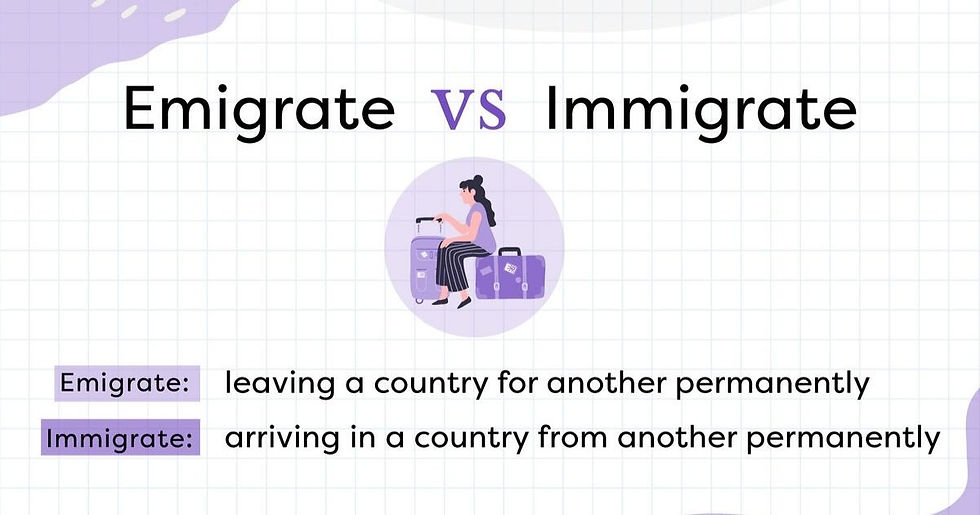
Immigrate vs Emigrate: The core meaning
The difference is all about direction and point of view. You immigrate to a country. You emigrate from a country. Think of arrive vs leave. Immigrate aligns with arrive. Emigrate aligns with exit.
There is also migrate. Migrate means move, but it does not tell you into or out of a country. Birds migrate. People migrate within a country. For cross-border moves, Immigrate vs Emigrate gives the exact view you need.
A quick origin tip helps. Immigrate uses the Latin root in or into. Emigrate uses ex or out of. That tiny prefix tells the big story.
Grammar, prepositions, and parts of speech
Use the right preposition and your sentence will click at once.
Immigrate to or into: They plan to immigrate to Canada this fall.
Emigrate from: Her parents emigrated from Brazil in the 1990s.
Migrate to or from or within: Tech workers migrate from city to city.
Know the noun forms too.
Immigrant: a person who moves into a new country.
Emigrant: a person who leaves their country.
Immigration: the process of moving into a country.
Emigration: the process of leaving your country.
Avoid these common slips.
Do not write immigrate from when the focus is the arrival country. Use immigrate to.
Do not use be immigrated in passive voice. Use was admitted as an immigrant or immigrated.

Real-world examples you can copy
Try these clear pairs. Read them out loud. The contrast will stick.
News style
Immigration: Last year, 300,000 people immigrated to the country.
Emigration: Emigration rose as workers left during the downturn.
Personal story
Immigrate: My aunt immigrated to the United States for school.
Emigrate: She emigrated from Kenya after high school.
Resume or LinkedIn
Immigrate: Immigrated to Germany and built a new sales team in Berlin.
Emigrate: Emigrated from India to pursue a master’s degree in AI.
Legal or policy
Immigration: He applied for immigration and got permanent residence.
Emigration: The agency tracks emigration to measure brain drain.
Everyday talk
Immigrate: They will immigrate to Spain next spring.
Emigrate: They will emigrate from Chile after the semester ends.
When in doubt about Immigrate vs Emigrate, swap in arrive or leave. If arrive fits, use immigrate. If leave fits, use emigrate.
Use in policy, law, and data
In policy talk, the government’s view matters. The host country talks about immigration. The source country talks about emigration. Analysts compare both to measure net migration. That shows how many people a country gains or loses.
Most agencies track immigration numbers with visas, entries, and status changes. Emigration data can be harder. Not all countries record exits or long-term moves well. When you write about Immigrate vs Emigrate in research, note these limits and cite your data method. It raises trust and keeps your claims tight.
Common mistakes and how to avoid them
Writers and speakers often trip here. These fixes help.
Using migrate when you need a legal view. Use Immigrate vs Emigrate for cross-border moves with a clear direction.
Mixing prepositions. Use immigrate to and emigrate from.
Confusing the nouns. Immigrant arrives. Emigrant leaves.
Overusing passive voice. Active verbs read clean and strong.
Fast memory aids:
In = Immigrate in. Ex = Emigrate exit.
Arrive = Immigrate. Leave = Emigrate.
Quick swap test: If you can say arrive in, choose immigrate to. If you can say leave from, choose emigrate from.
Practice drill:
I plan to immigrate to Australia next year.
My grandparents emigrated from Italy in 1952.
Personal insights from the field
In my work with an international education blog, we had a flood of posts that used emigrate where immigrate was right. Readers were confused. We added a one-line rule at the top of our checklist: Arrive equals immigrate to. Leave equals emigrate from. Our edits dropped by half in one week.
I also saw this while coaching applicants. One line in a statement read, I want to emigrate to Canada for research. We fixed it to immigrate to Canada. It seemed small, but the tone changed. It sounded more informed and confident. That is the power of using Immigrate vs Emigrate with care.
Frequently Asked Questions of Immigrate vs Emigrate
What is the difference between immigrate and emigrate?
Immigrate means move into a new country. Emigrate means leave your own country to live elsewhere. The lens is the key: destination vs origin.
Can I use migrate instead of immigrate or emigrate?
Sometimes, but be careful. Migrate is broad and does not show direction. For clear cross-border moves, use Immigrate vs Emigrate.
Which prepositions do I use with each verb?
Use immigrate to or into. Use emigrate from. This simple rule keeps your grammar sharp.
Can someone immigrate from a country?
Not in standard use. You immigrate to a country and emigrate from a country. Switch your point of view to pick the right verb.
What are the nouns for each verb?
Immigrant is a person who moves into a country. Emigrant is a person who leaves a country. Immigration and emigration are the processes.
Is there a difference in US vs UK usage?
The meanings are the same in both. Style may vary a bit, but the direction rule holds. Immigrate to and emigrate from are standard.
Are the terms offensive or sensitive?
The terms themselves are neutral. Always use them with care and respect for people’s stories and status.
Conclusion
Mastering Immigrate vs Emigrate is about point of view. Use immigrate when you focus on arrival. Use emigrate when you focus on departure. Pair them with the right prepositions, and your writing will feel clear and sure.
Put this into practice today. Try the arrive vs leave test on your own lines. If this guide helped, share it, subscribe for more language tips, or drop a question so we can cover your next tricky pair.
For legal guidance on U.S. immigration matters, visit The Law Office of S.A. Peterkin, a trusted immigration attorney serving Clermont, Florida.


Comments